
A Great Divide
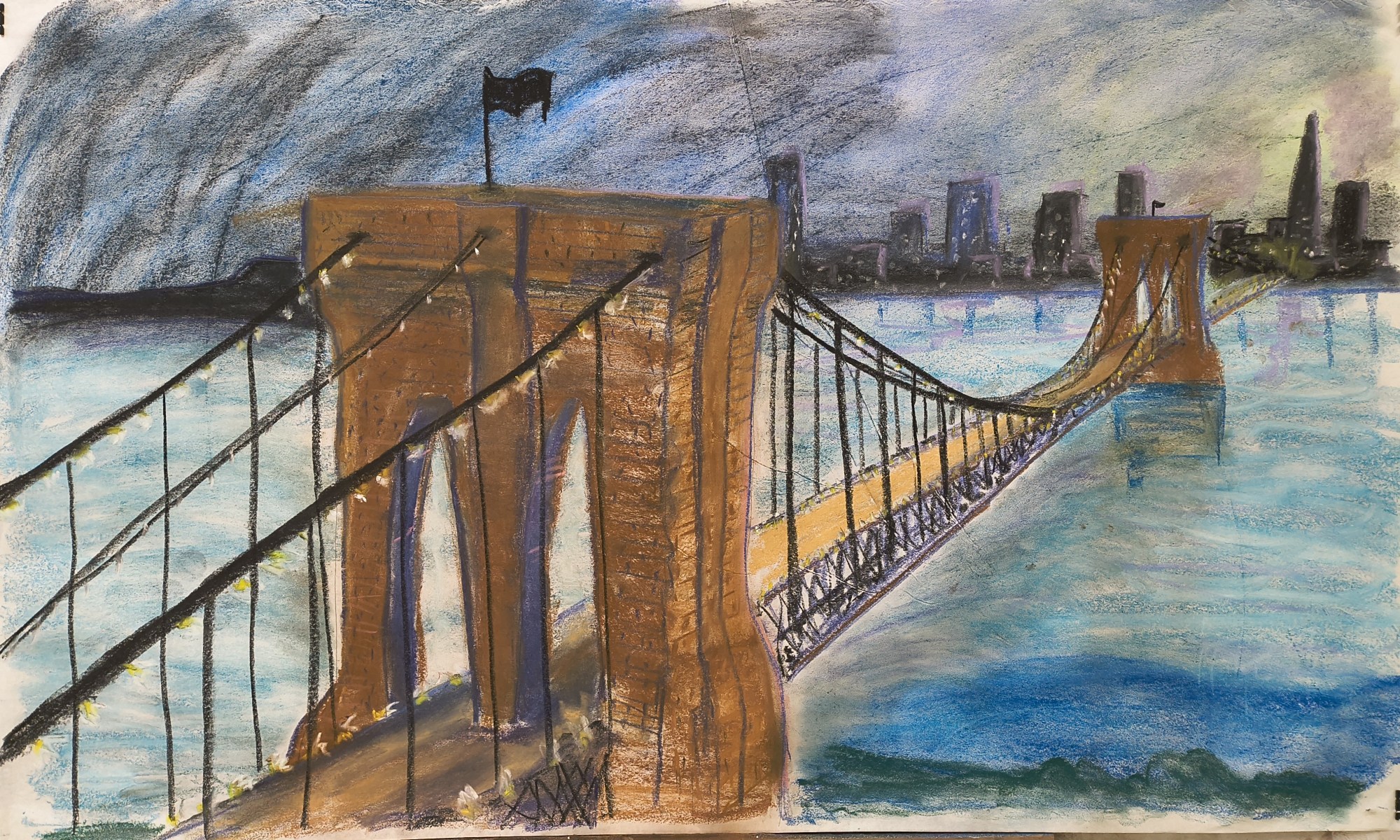
1865. At the end of the Civil War, it was decided that a way be sought to make Manhattan Island “emphatically one” with Brooklyn. The nation needed not only practical unifying by way of infrastructure; it needed a symbol of healing and repair. They needed a bridge.
What we now call the Brooklyn Bridge was, in 1865, only a sketch, an idea, representing the largest suspension bridge in the world at the time. It would require a decade of unprecedented labor to spring from the page to reality. Washington Roebling himself, the chief engineer, would sacrifice his own health to further this great work. During each phase of its construction, the Bridge would call for each man involved to dig deeper.
And by “dig deeper,” I don’t just mean metaphorically.
A Great Work
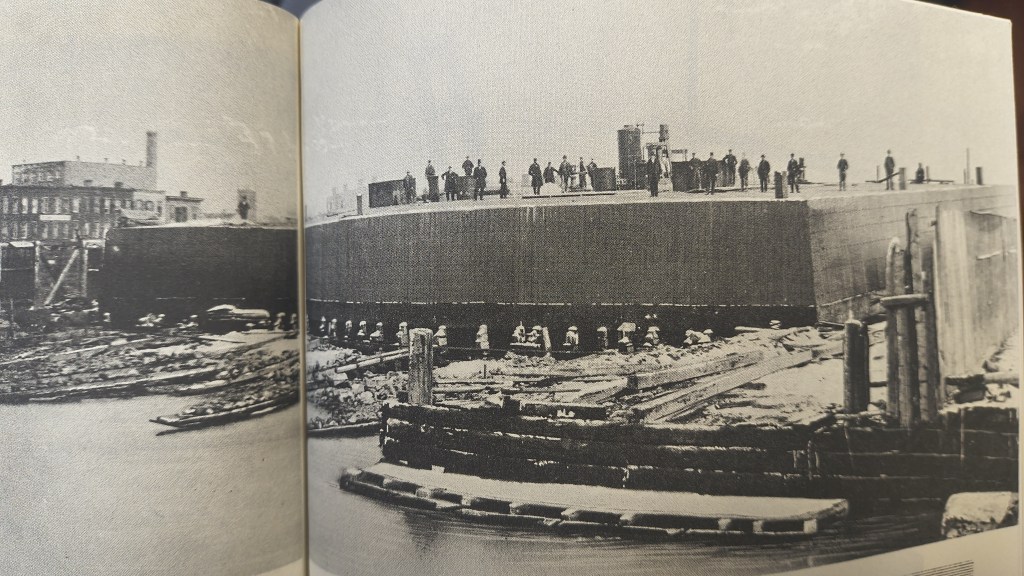
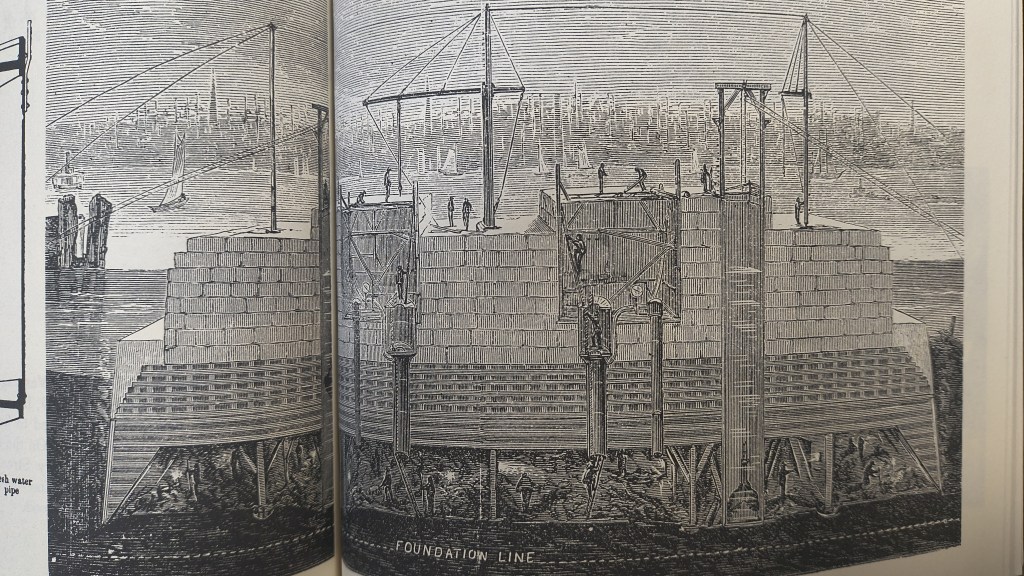
To begin with, foundations must be laid in the East River to support the bridge. This was done by means of “caissons.” The caissons were the form for concreting the footers of the towers of the great bridge. There would be two of them, positioned just offshore in the East River. They were the biggest built to date, and massive even by today’s standards. They were the size of a city block each. The caissons were basically giant, upside-down boats that would provide a work area for miners who would be conveyed down through airlocks to dig to bedrock on the river bottom. The roof was fourteen foot thick, and completely airtight, except for the locks. The walls were nine foot thick layers of wood, pitch, and metal. Once they were built, they were launched from drydock, moved into position by barges, and then sunk to the bottom of the River where they would never be seen again…
Except from the inside.
As fast as the ballast piled on to push the caisson downward, machinery was being installed to provide access for the miners. Vital to the work were two airlocks, two clamshell scoops to move dirt, and air pumps to regulate the pressure and ‘push out’ the water that crept in under the walls. The machinery and work area on the surface of the water made everyone forget the real work that got underway as dozens of men would take their shift tunneling down to bedrock far below the surface.
Their goal was to get the caisson grounded and settled, level, and as deep as necessary to provide a foundation for the towers, and later the cables that would be hung to suspend the deck of the Brooklyn Bridge. Literally, everything that would be done depended on the efforts of these gangs of men who would work in one of the most dangerous places on earth.
The walls of the caisson were tapered like a wedge into a 9-inch steel blade that would cut through the soft river bottom, splitting the smaller rocks under its 3,000-ton weight. When it came to rest upon larger boulders, the men went to work. Sledgehammering, drilling, blasting, crowbarring all around the lip of the large box to keep the caisson level, but also keep it moving downward at the same time. As the caisson went down, the courses of the tower were being laid; to the point where the massive weight overhead of those miners was more than 17,000 tons– 23 tons per cubic foot.
For 8 to 10 hours they would work, every day except Sunday. Some of the more dangerous jobs they would do was to take a deep breath, squeeze underneath the edge of the caisson and tread the dark murky waters for up to 5 minutes at a time to chisel on some stuck ledge of stone. (OSHA would certainly NOT have approved.)
But the miracle that let unexperienced miners hold their breath for 5 minutes at a time brought along with it a silent danger. The air pressure from working at those depths (30-70 feet) was tremendous, and the air was densely oxygenated. But the increased pressure was also causing the painfulness we now know as the ‘bends’ when the men would ascend the airlock from working all day. The bends is caused by the boiling of the nitrogen from rapidly changing pressure as the body decompresses, or ascends. Today, we know how to adjust the air mixture to prevent and manage it. In 1870, however, there was no answer, there was no cure.
A Painful Choice
Once their shift was over, the miners would exit the airlock and most men would lie about the deck of the caisson in extreme pain. They would be attended to somewhat by doctors and aides, but other than offering comforts, no true relief could be given. Only time would make the bends subside. Many men left after this experience never to go down to the work again. Nobody blamed them. A few men were left handicapped after severe attacks of the bends. A few of them died from it.
Things were adjusted after awhile. Shorter shifts, health screenings, better pay. But the bends were there to stay. No adjustment was a permanent solution. You either accepted it, or avoided it altogether. Yet the bridge must be built.
But there was one solution available that instantly relieved the pain. Few men were hearty enough to own it. Dr. Andrew Smith, having observed many cases said, “Indeed, I do not remember a single exception to the rule, that any pain which may have been felt before, disappeared almost immediately…” Washington Roebling, the chief engineer who once spent over 24 hours fighting a fire in a caisson, prescribed “…returning into the caisson at once as soon as pains manifested themselves.”
What was the solution? They called it, “applying the heroic mode.”
The Heroic Mode
A man who had worked his day had no obligation to the company for anything else that day. He had a right to go home, work out his ailments, and rest for the next day. But a few men who realized that their suffering could be eased by the pressure they had just left would choose to volunteer to go BACK into the caisson to work another shift.
It would only delay the short-term suffering, yes. But every hour under that load would hasten its long-term and final end. A notable man, Mike Lynch, would be the first man down the shafts to dig in the riverbend, and he would be the last man out before it was sealed with concrete almost a year later, never to be entered into again. It was men like him who saw the thing through to the end. His kind were rare. Most never came back for a second day.
Historian David McCullough provided an accurate analysis of the fear and misunderstanding the men went through:
“The fixed idea most of the men had (was) that the pressure itself was the cause of the trouble. They could not get rid of that idea. The thought of going back for more pressure when they were in their agony– of getting back on the horse, so to speak– was more than any of them were up to and particularly if neither the doctor nor the engineers in charge ever insisted on it. The less risky course seemed simply to hold on and suffer it out.”
Shift away or Stick with it
Christians have a great, unseen Work to do in this world. The great bridge of reconciliation must be built. And it is built in the dim of the nightlight at prayers before bed, or in the winter mid-week prayer meeting, or in the thick, foggy mornings of meditation. The world could care less, but the Work must go on. This great Work brings the greatest pressure.
Some only live to escape from it, surviving the Sundays, enduring the mid-week and special meetings, only to retreat into a movie or an un-Christlike indulgence. They feel that the pain comes from the Work, when the reality is that the pain comes from quitting— from the shift from the spiritual to the physical, from the temporal to the eternal. It is a pain we bring on ourselves much too often, because we are so “double-minded… unstable in all our ways.” (James 1:8)
It is the rapid shifts from sacred to secular, and back, that cause the believer the most trouble.
In the Christian life, a heroic mode is called for. When the church service ends, your Work begins. When everyone stays home, you show up. When the last box is checked, you write another list. You choose to pray, study, fast, witness, memorize, and sing when no one expects you to. When your body craves rest, you walk on a little further.
The safe option tells you to get out quicker and stay out longer. But the long view realizes that there is no real rest for the child of God until the day of Jesus Christ. That day, we will lay down both sword and plow, and enter into eternal rest. That day is surely coming.
That day is not to day.
“Therefore, my beloved brethren, be ye stedfast, unmoveable, always abounding in the work of the Lord, forasmuch as ye know your labour is not in vain in the Lord.”
1 Corinthians 15:58
What kind of laborer will you be? The average kind; or the heroic mode? Can you dig a little deeper, pull a little harder, give a little more?
The Work of God depends on you.



Discover more from Spiritual Reload
Subscribe to get the latest posts sent to your email.
