


“Stand in the gate of the LORD’S house, and proclaim there this word, and say, Hear the word of the LORD, all ye of Judah, that enter in at these gates to worship the LORD.”
Jeremiah 7:2
God’s Pattern In An Old Testament Prophet
Jeremiah was given a mission early on in his life to preach to the nations. God said, “Before I formed thee in the belly I knew thee; and before thou camest forth out of the womb I sanctified thee, and I ordained thee a prophet unto the nations.” (Jer. 1:5) The immense weight of this calling was not lost upon Jeremiah. “Ah Lord GOD!” he cried. You can hear the tremor in his voice at the magnitude of the responsibility.
We know by reading that Jeremiah was doomed for failure. God, in all of his dealings with Jeremiah, never promised him that anyone would hear, let alone listen to his preaching. The last writing we have by Jeremiah summed his entire ministry: “Is it nothing to you, all ye that pass by?” (Lamentations 1:12) He did not capture the attention of a single, notable person in his lifetime. He did not change the mind of one soul; let alone alter the course of a whole nation. Yet he was sent by God to reach them all.
Jeremiah was probably stoned to death in Egypt according to Jewish tradition. He died, and Israel did not turn.
God’s Plan For The New Testament Church
The Apostle Paul joined the mission late by many standards. The last command of the Lord Jesus was to “Go ye therefore and teach all nations…” (Matt. 28:19) Paul, as Saul, resisted that call until he himself was gloriously converted in Acts 9. The death of James in Acts 12 seems to have allowed Paul entrance into the apostles’ fellowship as “one born out of due time.” (1 Cor. 1:7-9) Though his start was delayed, the call was the same, and Paul would make up for lost time, in his own testimony: “I was not disobedient… But shewed first unto them of Damascus, and at Jerusalem, and throughout all the coasts of Judaea, and then to the Gentiles, that the should repent and turn to God, and do works meet for repentance.” (Acts 26:19-20)
This was not only the Apostles’ commission, it was Paul’s personal calling. It is also the charge passed down to every believer today.
How can one man reach the world?
The methods God used have been limited. Whereas modern evangelists would use films and blogs and QR codes and livestreams, the absence of the Holy Ghost has left a void too large to ignore. Other means have come and gone, blossoming as the solution to ‘reach the world for Christ in our generation,’ yet failing to bring forth fruit. From mission societies, tract leagues, TV and radio broadcasts, and bus ministry promotions to Christian gym hybrids, (YMCA, Crossfit) livestreaming, and Facebook ads, even to AI innovations– every technology has been baptized into ‘building the Kingdom’ but has fallen (and will fall) very short of the goal. Sure, these may have encouraged a believer or two during their time, but the call restated is still “Go ye into all the world and preach the gospel to every creature.” (Mark 16:15)
Is God’s call unattainable? Are we waiting for another tool to leverage against the wiles of the devil?
After his conversion, Paul got busy immediately testifying to anyone who would listen what God did for him. He did not wait for the church’s approval, though he got it about 3 years after his conversion. (see Acts 9:20-23, “many days”) Paul then traveled extensively, as oft and as far as he could afford. The circuit he ran took him in ever-widening circles westward– Asia, Macedonia, Rome, Spain– from his adopted home base in Antioch of Syria. The times spent in a boat at sea, or riding along a dusty caravan, or wearing out his sandals walking were interrupted by repeated attempts to evangelize and organize a new church in a new area.
Yet even these attempts fell short of reaching the nations. Paul was beheaded having converted neither Jerusalem let alone the world. Why does it seem that Paul and Jeremiah did not live up to their vocations?
God’s Expectation for the Believer and the Nations
To say that the Apostle Paul ‘fell short’ is an immense over-simplification of a worldly opinion. It is man’s perspective based on man’s expectations. If God will allow us to see from His point-of-view, I believe we will see the failure stems from a misunderstanding of a much bigger, longer-lasting scene that has stretched from BC through AD. A panorama that is so broad, yet so attainable IF we will do– and have faith in– what God said to Jeremiah, to Paul, and in Jesus Christ.
God’s Blessing on a Single Sermon
When God called Jeremiah to be a prophet to the nations he was not Israel’s favorite son. A prophet from Benjamin, he was of the least esteemed tribe of Israel. He was hated so much because of his preaching that he was a récidivant prisoner in Jerusalem. He never left the city except once against his will as a captive to Egypt. He had no promoters, companions, nor family.
How could one man who never traveled be the spokesman to a nation? In Jeremiah 1, after God appointed him as a national preacher, He said:
“But the LORD said unto me, Say not, I am a child: for thou shalt go to all that I shall send thee, and whatsoever I command thee thou shalt speak.”
Jeremiah 1:7
The success of God’s calling for Jeremiah did not rest in Jeremiah’s abilities. The Lord gave him the right message, and the right audience to preach it to.
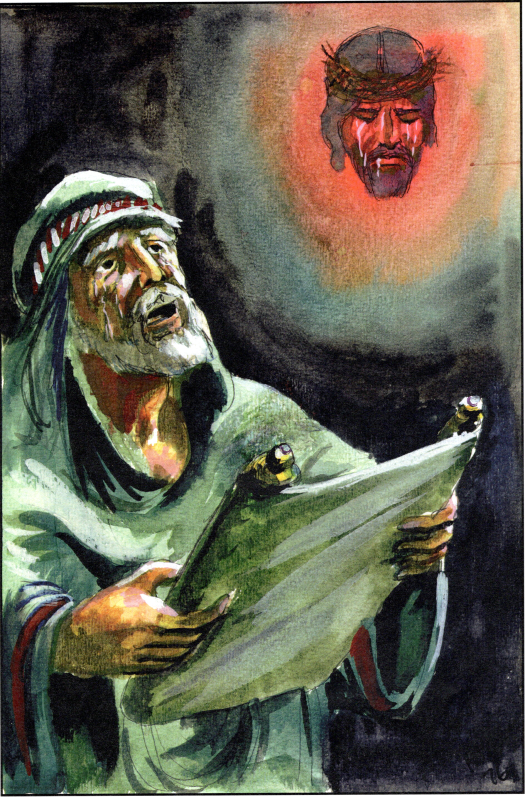
And, get this, it did not matter how many people hear it or not. Our text, along with many others in Jeremiah, shows the prophet weeping, crying out, delivering a sermon for the whole nation– from the doorstep of the Temple. No media coverage. No ‘shorts’ or ‘reels’. No newscasters or reporters. Many things written were either burned, drowned, or cast into the mortar of a brickkiln.
The nation did not hear the message Jeremiah preached that day. Did Jeremiah fail his nation?
Not according to the Holy Spirit, he didn’t.
The prophet did not fail his nation, because he did not fail to obey all that God told him. The truth is, the nation failed the prophet, because the nation failed God.
The nation knew that if God was going to speak, it would be at the Temple. If God were going to speak, it would be on the Sabbath days. There was no question when and where they should be to get God’s message for the nation. But they abandoned both. (see Jeremiah 17)
God did not expect his prophet to be omnipresent. He expected the nations to be present. God expects America to be at church. Every week. Without exception. Where the words of God are believed and preached, there will be an ultimatum for a nation. God expects it to be obeyed instantly.
“At what instant I shall speak concerning a nation, and concerning a kingdom, to pluck up, and to pull down, and to destroy it; If that nation, against whom I have pronounced, turn from their evil, I will repent of the evil that I thought to do unto them.”
Jeremiah 18:7-8
In Jeremiah’s 41-year ministry, he hardly left the city, yet he was faithful at God’s house on God’s day. Those who didn’t hear could not blame the prophet; they were to blame for not being in the right place at the right time.
God’s Blessing on a Single Letter
Forward to the Church-age, and you find God ordains preachers for nations. Paul is the notable example here. Though he traveled farther than Jeremiah, he fell short of seeing his own nation turn to Christ, let alone “all nations.” It wasn’t until he was arrested multiple times and his preaching muted that God enervated the mightiest work of all.
Paul wrote 14 letters, more than half of them from various prison cells. Of those letters, some were written to an individual (Timothy, Philemon), others to churches in cities (Ephesians, Philippians, Colossians), and another to a region of Asia Minor (Galatians). Paul was often hindered, yet the word of God was not bound.
Paul sent one letter that showed his faith in God’s calling on him as an apostle, and as a believer. This has been used more by Christians for the doctrine of salvation and the duties of practical living than any other. This was a letter to the largest national identity in the world. This is the first letter in the prophetic order of the New Testament: The Epistle of Paul the Apostle to the Romans.
In his introduction, Paul made an audacious claim.
“By whom we have received grace and apostleship, for obedience to the faith among all nations, for his name:”
Romans 1:5
Paul’s chief letter claimed an audience of the world, with authority to command them to repent. He preached this truth before (Acts 17) now he would legislate it. He ends his epistle as enthusiastic as he began:
“Now to him that is of power to stablish you according to my gospel, and the preaching of Jesus Christ, according to the revelation of the mystery, which was kept secret since the world began, But now is made manifest, and by the scriptures of the prophets, according to the commandment of the everlasting God, made know to all nations for the obedience of faith:”
Romans 16:25-26
Why, Paul was energized by the example of the prophets! He believed in the success of their calling, though it appeared at the time as a failure.
Paul’s mission also appears to have ended before it was fulfilled. Or did it?
Paul sent that one letter in the hands of Sister Phebe to the most powerful nation in the world. That same nation executed him just a few years later. Paul’s presence failed to impact that nation, but this letter of Paul survived as Scripture. Words of God founded upon the truth of the other Scriptures claimed something even more audacious: the Epistle to the Romans would succeed its earthy author, and be available today in every King James Bible for not only Rome, but every nation.
The world has seen a mass of communication explode through the world since 70AD. Yet in all the noise, the truth that makes free exists in one book. It was not Paul’s job to travel farther or faster, nor to advertise in a more modern and flashy way. Just write one letter, and your obligation to the nations is done. For long before you got here, the Word of God was working. “But they have not all obeyed the gospel. For Esaias (a prophet) saith, Lord, who hath believed our report? So then faith cometh by hearing, and hearing by the word of God. But I say, Have they not heard? Yes verily, their sound went into all the earth, and their words unto the ends of the world.” (Romans 10:16-18)
In God’s eyes, it now becomes the duty of every nation to read its mail. God wants to seek the world, but it behooves the world to seek Him.
God’s Blessing on a Single Man
I hope you have not lost the train of thought. Briefly, God may appoint one time or one place for one letter or one sermon to order the course of one nation. Just because the nation does not attend, or listen, or read, does not exempt them from the consequences.
This Sunday, many will be hungover from celebrating a nation who, comparatively, has had more opportunity to hear, yet has done little to obey. God has a message for her. But He will not blast it over loudspeakers from a mosque rooftop, nor will he ‘go viral’ on the internet. He will call upon a faithful preacher in some country town to spell it out. If the President, or the Senators or Representatives continue ignorantly leading pernicious lives with powerless testimonies, they will be held accountable to that one man’s message. God’s word is the final authority, whether or not you hear it, like it, or obey it.
Because the way to God has always been a narrow one. “Because strait is the gate, and narrow is the way, which leadeth unto life, and few there be that find it.” (Matthew 7:14) Jeremiah knew that the way to God would not be broad: “And I will give them one heart, and one way, that they may fear me for ever.” (Jer. 32:39a)
Jesus Christ came to be the “Saviour of the world” (John 4:14) though he, like Jeremiah, never left Israel (save one trip as an exile to Egypt). Anyone in any nation cannot claim ignorance to His existence, nor can they claim exemption to His authority. He said of Himself, “I am the way, the truth, and the life: no man cometh unto the Father, but by me.” (John 14:6)
Jesus, like Jeremiah before Him and Paul after Him, would die before his mission materialized. Jesus walked the earth with hardly more than a dozen faithful followers. “He came into the world, and the world was made by him, and the world knew him not. He came unto his own, and his own received him not.” But the miracle that is the Gospel of Jesus Christ, that mighty prerogative, would enact with full power and authority after this One Man’s death, burial, and resurrection. “But as many as received him, to them gave he power to become the sons of God, even to them that believe on his name:” (John 1:10-12)
God’s work is finished. God’s word is done. Many will miss it, not at the fault of Paul, Jeremiah, or the Lord Jesus Christ. They will be condemned by their own willful ignorance and prejudice of God’s method of getting a message to a nation. One sermon, one letter, one Man.
Happy birthday, America. May you get the message intended for you this Sunday.




Discover more from Spiritual Reload
Subscribe to get the latest posts sent to your email.

Great message!!l
It is sad how so many people miss the greatest letters on earth.
LikeLiked by 1 person
The Lord never ceases to surprise me with the Book. And I share your sadness in that.
LikeLike