

“Blessed are the poor in spirit”
Matthew 5:3
What makes a great sermon?
Growing up, I listened to preaching on a near-daily basis. What wasn’t listened to on the radio, played on my portable cassette deck, or attended to in person was read on paper. Regular attendance to my local church on Sundays, Wednesdays, and special meetings was the bread and butter of my spiritual growth. There were some good sermons, and there were some terrible ones.
I could always tell when I heard a good sermon. It stuck. It stirred. And I could always tell when a sermon went badly. It just… stunk. To this day, I cannot satisfactorily tell you why.
A good sermon does not depend on style, energy, volume, or length. A bad sermon does not happen because of false doctrine, broken references, or slangular speech. You can have everything right and still have everything go wrong. (And I have seen everything wrong, yet God “work together for good.”)
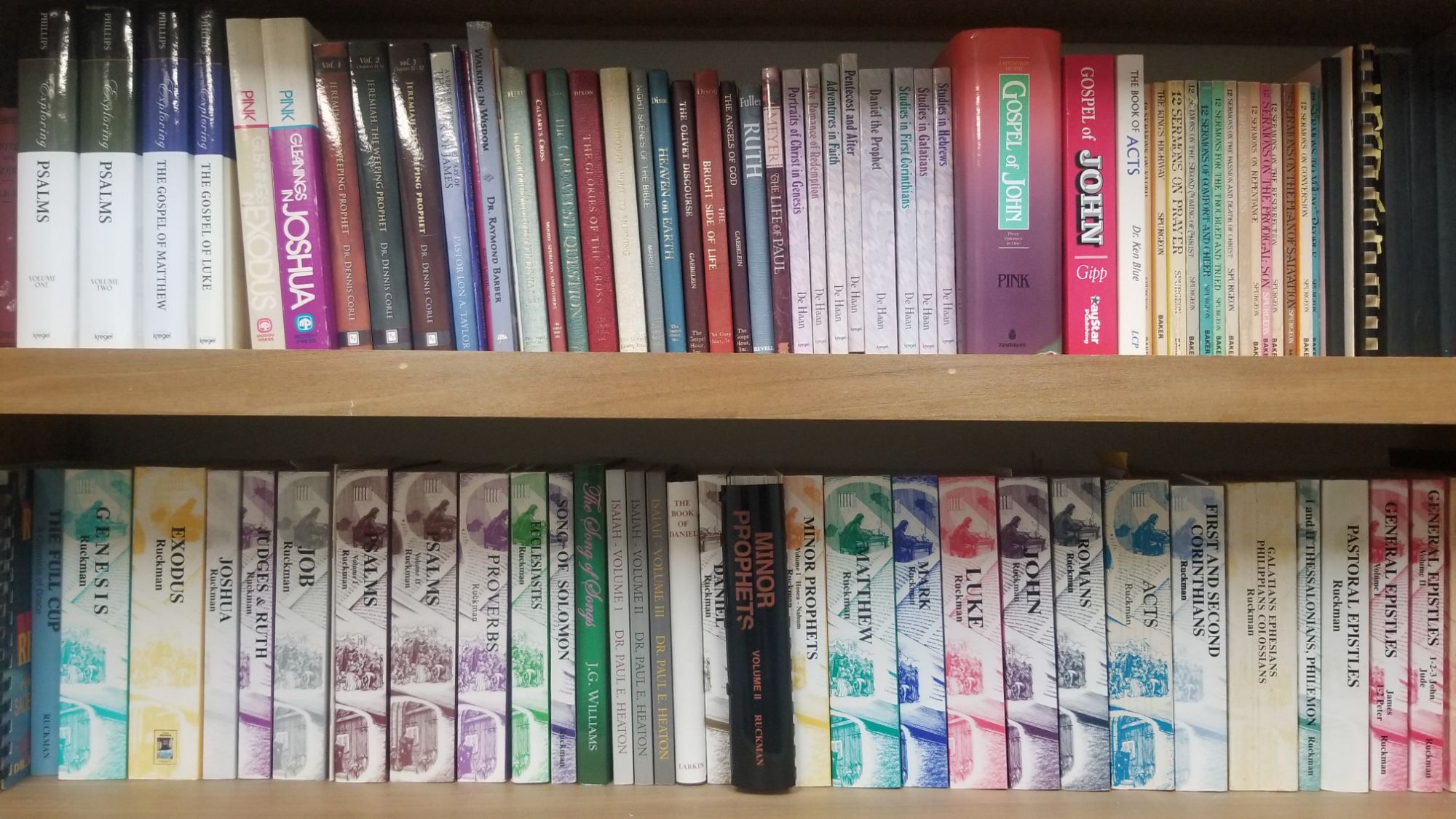
In Bible school, I consumed A.P. Gibbs’ The Preacher and His Preaching. I read through Lectures to my Students to learn what C. H. Spurgeon had to say. Then I took in Lince and Ruckman in Old Path Preaching Methods and How To Teach The Bible. I used all the money in my college budget to buy T. DeWitt Talmage’s 500 Selected Sermons, which took the better part of a decade to digest. Along the way I supplemented with Havner, Paisley, Reidhead, McGinley, Lloyd, Ravenhill, Morrison, Whitfield, Rogers, Redpath, Thomas, and a few others. My conclusion, thirty years later: it doesn’t matter what prefix leads your name or which suffix follows it, every man is capable of absolutely wasting an hour of your life away with a bad sermon.
The Standard to Meet
We need a standard to measure against. Not just a still-life portrait of a grammatically correct, expositorially sound outline. But an actual sermon preached aloud, outdoors, relentless as the Santa Anna winds, yet captured on paper as carefully as you might snatch a dandelion tuft floating on the airwaves.
Noah Webster’s definition for a sermon is, “a discourse delivered in public by a licensed clergymen for the purpose of religious instruction, and usually grounded on some text or passage of Scripture. Sermons are extemporary addresses or written discourses.” (American Dictionary of the English Language, 1828) Dr. Phelps is quoted in The Preacher and His Preaching giving one of the best blue-collar definitions of a sermon: “A sermon is an oral address to the popular mind, upon Scriptural truth, elaborately treated and with a view to persuasion.”
The word ‘sermon’ is not a Bible word, but it is a Biblical practice. Gibbs says that it is a Latin word meaning ‘to thrust’ or ‘to stab’. Public preaching should always come to a point. If the Word of God is employed wisely, it is “quick and powerful, and sharper than any twoedged sword, piercing…” (Heb. 4:12)
The Sermon on the Mount
The Lord Jesus’ public discourse to multitudes of men, women and children lies in Matthew chapters 5, 6, and 7. It can be read aloud in about 18 minutes quietly, but loudly projected it may easily take 2 or 3 times longer to recite. The message is to Jews in the Promised Land who will one day accept their Prophesied Leader. The cross is yet distant, so the Gospel of the death, burial, and resurrection are not His primary topics. The Kingdom of Heaven is imminent, so we see much that has yet to be fulfilled in these chapters.
But what mighty wonderful truths He reveals! This is not the fruit of the Gospel, this is the seed that the Sower sowed, and mightily it grew, the stem cracking upward past the thorns and the roots breaking apart the boulders of tradition. Masterfully outlined, His beginning line has remained one of the most recognizable of Bible statements, six words:
“Blessed are the poor in spirit”
And with what deftness He wields the written Words, quoting from the Law of Moses, drawing from the writings of Job and David, chronicling the history of Israel’s standing with God in only three short chapters! An entire age is opened. A nation is reproved, rebuked and exhorted. And then He compresses the message to fit inside of a book, and seals it with a moral in a story, also a mere six words:
“Great was the fall of it.”
Matthew 7:27b
Two kinds of men hear these words. One kind hears, and does something about it. Another kind of man hears, but does nothing with it. The first is a wise man, who builds his house on a rock– he survives the storm. The second is a fool who digs around in the sand to build his house. His legacy is a catastrope. His end is cursed.
Blessing and Cursing
Jesus Christ’s picture-perfect sermon is a mold we can pour our thoughts into to forge a good sermon. What elements drive a good sermon? It will be the bookends: the beginning and the ending. What points denote the bookends? They will match the model sermon from the Master Speaker: the blessing of God’s way and the curse of Man’s way.
I have heard and preached many bad sermons. I never again want to preach where the blessings of salvation are not praised. I never again want to preach where the damnations of rejection are not decried.
Of all the volumes preached and of all the books written through the ages, I grab but two sentences to place at the head of my library and at the end of it- the bookends of all truly GREAT sermons, “Blessed are the poor in spirit!” “Great was the fall of it!”
Discover more from Spiritual Reload
Subscribe to get the latest posts sent to your email.

Yep. Good thoughts as always my brother. Thank you for writing this!
LikeLiked by 1 person