


“Yea, and why even of yourselves judge ye not what is right?”
Luke 12:57
The conversation that we discussed previously in Luke 13 took place at the end of a longer discussion that started in Luke 12. Jesus’ taught part of these lessons in public, to the temple crowd. Some of the parables and lessons He intended only for his disciples. God used Luke’s gospel to frame the whole setting for the present-day Bible believer who would have to live by faith through the fracas we call the news.
Beginning with Peter’s question we pick up pieces of a modern day newscast. The first 40 verses had been addressed to “the disciples first of all.” (12:1) Others listened, and at least one man tried to make a byline with his family drama (12:13). Some wanted to hear, but were rejected of the Lord. When Peter heard these pointed parables from Jesus Christ, he recognized the importance those words carried. Naturally, he asked for clarification for the group, as though to appease his own conscience.
“Then Peter said unto him, Lord, speakest thou this parable unto us, or even to all?”
Luke 12:41
- The primary workings of God in society were intended so those listening to Jesus would rest in His words. Peter had to learn that not all that goes on in the world was for everyone. God chose Peter as a disciple to instruct him particularly. Not all called were chosen, or faithful. Peter received some truth that was only for him, not for any other. We too, will have to rest in the Scriptures aside from what is currently trending.
- God worked in Peter’s life to build Peter’s faith. God deals the same with us today. What comes your way is intended first of all to teach you about the nature of God. Secondly, it can be used to teach others. There is a problem when we try to pass along something that God prescribed first to us. God works in your life to build your faith.
- With access to much that happens in the world every day, how do we edit the things that God meant for us, and the things that intrude into our eyes and ears? Despite our best efforts to isolate, we will read, hear, and watch more than our share of national, international, entertainment, sports, tech, ‘science,’and lifestyle news. How do we muffle the noise of the news?
Let us take three notions from the Lord’s answer to help Peter. The first is what Peter should be:
1. The Watching Servant- Luke 12:41-48
News is often bad because of its timing. When we are told something may change how we use the knowledge more than what has been told.
In this example: the servant has been told that his lord is returning. But he is told early in the lord’s departure, and a long season of waiting has made him grow irresponsible. According to the story, he “knew his lord’s will, and prepared not himself.” (12:47) The ‘what’ was right, but the ‘when’ cost him his promotion and reward.
The news carries the pressure of NOW. We want to know what the president says ‘live’. We have to know the stock market numbers at the bell. We want video of the tornado as it’s twisting. The proper affect of what has happened is negated because of when we find out. We can know too early. Thus information becomes a distraction, while our true mission becomes a burden.
Remedy: First is the responsibility of your daily duty. How will knowing the body count from the mass shooting help you to “give them their portion of meat in due season?” (12:42) Answer: it will not. Peter’s worry of ‘getting the news out’ met with the stern reminder to a duty that he had, and would be reminded of later, to “Feed my sheep.” (John 21:16)
I brought all of my children for routine dentist appointments. We sat quietly in the waiting room together, watching some home remodeling rerun on their television. I sat with my back to the tv, watching the people intermittently over a book I brought. I detected a lady watching me and the kids intently from across the room. She made her way to me slowly, but very conspicuously, she wanted to be seen. She strutted up in front of me, so I obliged with a, “Can I help you?”
“Have these kids been affected by what happened yesterday?”
I realized she was talking about a news event that had been ‘breaking’ for several days already. I hated to break her impious and inordinate worry, but I did.
“No, no, ma’am, it hasn’t affected them at all. They don’t even know about it.”
That really took the wind out of her sails! She didn’t know how to react to my lack of reaction. Here she was, all balled up about something hundreds of miles away, and now she was baffled at the possibility that I would not drag all of my children through the media prescribed mire for the day. But informing them of the world has never been my primary duty. Informing them of the good ways of God, however, is. This woman had lost her duty as a mother, grandmother, wife, daughter, and sister thanks to ‘breaking news.’
Second is the responsibility of reaction. “Blessed is that servant, whom his lord when he cometh shall find so doing.” (12:43) What can you DO– besides ‘like, share or subscribe’– about what news you’ve heard today? If knowing cannot produce action, it will puff the head. “Knowledge puffeth up, but charity edifieth.” (1 Cor. 8:1) How trim and toned your life could be if it were kept from the tumors of the ‘got to know!’
Because once you know, you must react. Once Adam knew he was naked, he must find clothing. He was responsible to react. In this supreme archetype, Adam succumbed to the knowledge of good and evil. Now, “to him that knoweth to do good, and doeth it not, to him it is sin.” (James 4:17)
The last is the responsibility of you being personally accountable to God. The servant was worried about all the other lazy servants, and began to beat them instead of feed them. He became angry at what they weren’t doing, and it made him neglect what he himself should have been doing. This is the devil’s ultimate goal: at the end of the story, nobody is doing what they were supposed to do! The informed and the ignorant alike had been ambushed!
“And that servant, which knew his lord’s will, and prepared not himself, neither did according to his will, shall be beaten with many stripes.
But he that knew not, and did commit things worthy of stripes shall be beaten with few stripes.”
Luke 12:47-48a
This parable relates directly to the prophecy of the Lord’s return. God’s schedule is tentative, though it is sure. We are urged to readily and responsibly DO the Lord’s will, until He comes. We are told to “Therefore judge nothing before the time, until the Lord come,” (1 Cor. 4:5) The only date we accurately keep is with death, and that one is sure, but not specific. Our appointment at the Judgment Seat of Christ is enough to keep us occupied without worrying about what else is going on in the world!
“For unto whomsoever much is given, of him shall be much required: and to whom men have committed much, of him they will ask the more.”
Luke 12:48b
2. The Woeful Warning- Luke 12:49-53
This second notion is what Peter should know. News strikes us bad because of it inevitability. Christ said it this way: “I am come to send fire on the earth; and what will I, if it be already kindled?” (12:49) The news often blasts us with things that ought not to happen… yet.
The shock you felt at the young ages on the obituary column. The crimes you thought only happened in big cities. The sharp rise in costs as inflation raced past your savings account. The collect call from a son or daughter from the police station. Yes, for many years we were told, “perilous times shall come.” (2 Timothy 3:1) But never did we think we would awaken and find them here now.
Troublesome times do not always develop while you watch. Oftimes the fire is already kindled, or strikes so suddenly that it is incomprehensible. Even Christ was consumed with His own fate, “But I have a baptism to be baptized with; and how am I straitened till it be accomplished!” (12:50)
But the example does offer a solution: does not a match-set fire prevent the lightning strike?
First, though He was predetermined to a cruel end, He did not let that deter Him to the left nor the right. He did not stop being compassionate. In the very next chapter, Luke 13, we find Him healing a crooked woman and weeping over Jerusalem. God’s Son was not a fatalist, or a Calvinist. He poured Himself into “doing good” even though He already knew how bad it would go for Him.
Second, though He was predeterminded to a cruel end, He did not stop being truthful. He preached against sin that He would have to pay for eventually. He called men to repentance, because they needed to hear it, whether or not they would obey. He criticized the religious and chided the ignorant. We’ll never know if things may have gone differently for the Son of God if He would have cooled His message, because until the very end, it was flaming hot.
The world may careen toward chaos faster than you had imagined, but the remedy presented in this woeful warning is this: a world out of control does not mean His Word is broken. The Word runs more swiftly (Psalm 147:15, Daniel 9:21) than the news does.
Light your torch from the Bible. Let the controlled burn prevent the wildfire of sin from overwhelming you. The Lord did not worry with stopping it, instead, He fanned it.
“Suppose ye that I am come to give peace on earth? I tell you , Nay; but rather division:”
Luke 12:51
In addition to what Peter should be, and what he should know, is how every man should judge. This last notion is spoken “to the people.” (12:54)
3. The Weather Report- Luke 12:54-57
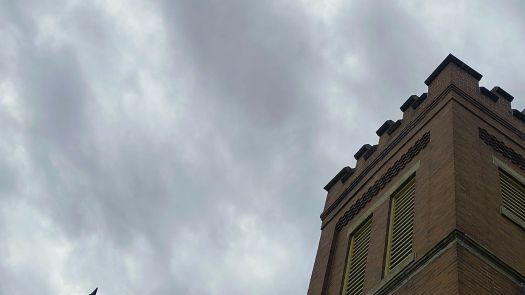
The weather forecast is a regular part of the news that focuses on the future. Whereas the watchful servant had a duty for the present, and the woeful word revealed a pattern from the past, the weather report inclines you to look to tomorrow. Very few of us care about the weather yesterday– but how many of us hope to have just the right conditions for the days ahead! Humans assume they have time, and so they plan. It’s natural. And the Lord Jesus channels that natural yearning into a spiritual notion: since we can judge and predict and guess at the climate by what we see, can we not trust the patterns and the measurements from the Word of God?
“And he said also to the people, When ye see a cloud rise out of the west, strightway ye say, There cometh a shower; and so it is.
And when ye see the south wind blow, ye say, There will be heat; and it cometh to pass.”
Luke 12:4-55
The Lord assented to the practice of weather-watching. From the fishermen on the shore of Lake Galilee to the shepherds on the hillsides of Bethlehem, noting a change of wind could mean the difference between a haul and havoc, a healthy or a sick flock. Have you ever thought that God made the sky to be discerned? The Creator codified the markers of nature to be understood. He made the clues that allow us time to adapt and prepare for predictable seasons as well as sudden storms. We need not tempt God for more signs, He has given us enough to live by.
“The Pharisees also with the Sadducees came, and tempting deesired him that he would shew them a sign from heaven.
He answered and said unto them, When it is evening, ye say, It will be fair weather: for the sky is red.
And in the morning, It will be foul weather today: for the sky is red and lowering. O ye hypocrites, ye can discern the face of the sky; but can ye not discern the signs of the times?”
Matthew 16:1-3
Similarly, as it relates to communications with the world of situations out of our control, we know enough to live by. We can not control the course of nature, but we can predict with some certainty, plan with some purpose, and call it ‘good’ or ‘bad’ with clear conscience. Neither can we control the ways of this “present evil world.” (Gal. 1:4) Yet if we can pronounce a certain kind of weather as “fair” or “foul” should we not spot the trend of the world’s events? If the signs are all evil, should we stand in the rain just to prove that things are as bad as the Bible said they would be?
“Ye hypocrites, ye can discern the face of the sky and of the earth; but how is it that ye do not discern this time?”
Luke 12:56
Summary
The funneling of much news into our minds will distract us, as Peter, from 1. watching our own selves in view of the Lord’s return, 2. heeding the warnings of Scripture of prophecies that were in motion before our births and will continue after our deaths, and 3. discerning the natural, given signs to plan our day. The Lord gave us His word as a “lamp unto my feet, and a light unto my path.” (Psalm 119:105) Very rarely are we entitled to the long view of things. God placed us in our villages to be witnesses. Let’s train ourselves to be vigilant to what’s going on in our immediate surroundings, not what everybody else is talking about.






Discover more from Spiritual Reload
Subscribe to get the latest posts sent to your email.
